Tuesday, May 6, 2014

Pangasinan beckons


Pangasinan is one of the country’s most diverse provinces blessed with incredible landscapes and natural wonders. It is the third biggest province in the country and home to unspoiled beaches, unexplored caves, hot and cold springs and other attractions.
The name Pangasinan means “place for salt” and the province is in fact a major producer of salt. Most people know Pangasinan for its Hundred Islands, Manaoag Shrine, bangus and puto, but there’s a lot more to see and experience in this province where one can find the “Boracay of the North”.
Tranquil beaches
Boracay of the North
Boracay of the North (Photo by Asenso Pangasinan)
In Anda, Pangasinan lies Tondol Beach dubbed as Boracay of the North, but more tranquil. With its fine white sand and crystal clear water, Tondol Beach offers vacationers an undisturbed view of the underwater world.
Patar Beach
Patar Beach (Photo by Romelee H. De Luna)
Pangasinan’s other “secret beach” is the Patar Beach in Bolinao. The sand here is not Boracay-grade but its clear aquamarine waters and unspoiled surroundings are as inviting as any of the top beaches in the country.
Tondaligan Beach
Tondaligan Beach (Photo by Province of Pangasinan)
For those who love water sport, the Tondaligan Beach in Lingayen Gulf offers skimboarding. Unlike surfing that requires big waves breaking far from shore, skimboarding starts at the beach where short-break waves could be found. The skim boarder would run fast, drop and mount his board before reaching the break point of the wave.
Breathtaking waterfalls
Pangasinan has several waterfalls. The most spectacular ones are the Bolinao Falls, Sangbay Falls and Sawang Falls.
Bolinao Falls
Bolinao Falls (Photo by Romelee H. De Luna)
Hidden behind the hills, rocky roads and lush vegetation is the Bolinao Falls, a waterfall that drops fine clear water that rises at waist level. A man-made staircase has been built to give visitors a way to “navigate” the length of the falls.
Sangbay Falls
Sangbay Falls (Photo by Province of Pangasinan)
Sangbay Falls is located in Brgy. San Vicente, Burgos and is regarded by many to be the most beautiful of the three waterfalls.
Sawang Falls
Sawang Falls (Photo by Province of Pangasinan)
The 15-foot Sawang Falls, in Brgy. Villacorta, Mabini is fed by precipitation collected in adjoining gullies from verdant hills.
Rocks and Caves
Rock Formation
Rock Formation (Photo by Romelee H. De Luna)
Rock Formation is another place to look forward to when visiting Bolinao, Pangasinan. As some kind of peninsula, Bolinao is surrounded by beautiful rock formations that offer spectacular view from the top.
Umbrella Rocks
Umbrella Rocks (Photo by Pangasinan Government)
In Agno, visitors will find the unique rock formations called Umbrella Rocks. As the name suggests, the rocks appear to be like gigantic umbrellas where one can enjoy the view of the ocean.
Enchanted Cave
Enchanted Cave (Photo by Asenso Pangasinan)
The Enchanted Cave in Bolinao is one of Pangasinan’s best kept secrets. Located inside a mountain of coral, the cave has a pool of cold, blue-green water that goes from three to 10 feet deep. There are ropes around the natural pool for the security of visitors.
Zipline in Mount Balungao
Zipline in Mount Balungao (Photo by Mary Rose A. Hogaza)
Mount Balungao
Mount Balungao (Photo by Mary Rose A. Hogaza)


Motorcycling Adventure in Mount Balungao
(Photo by Mary Rose A. Hogaza)
Mount Balungao itself is an attraction being an inactive volcano about 382-meters tall with its own hot and cold springs. On top of this mountain, one could go for a motorcycling adventure or take the longest zip line in the region.
Man-made wonders
God’s Love
God’s Love (Photo by Mary Rose A. Hogaza)
A 40-foot statue of “Ayat ni Apo Jesus” or “God’s Love” stands at the foot of Caraballo mountains in Natividad Pangasinan. It is made of fiberglass and was erected there on June 2013. Standing at1,108 meters above sea level, overlooking the town, it has been compared a lot to Christ the Redeemer in Rio de Janeiro, Brazil. The faithfuls and nature enthusiasts can climb the mountain to see it nearer.
Cape Bolinao Lighthouse
Cape Bolinao Lighthouse (Photo by Province of Pangasinan)
If you want a less challenging climb, the town of Bolinao boasts of its lighthouse. The Cape Bolinao Lighthouse was built by the Americans in 1903 and is the second tallest in the country. Climbing atop it, one gets a spectacular 360-degree view of the South China Sea.
Meanwhile, the town also welcomes guests to the Bolinao Museum. Open from Monday to Friday, the museum has nature dioramas and layman’s lesson on native flora and fauna. It also features ancient burial jars, Stone Age tools and mammoth fossils that were excavated from a 14th to 15th century burial site in Bolinao.
A visit to Pangasinan offers a chance to feel “presidentiable” by staying at The President Hotel, a classic hotel that opened on December 2004. It was built on the birthplace of the 12th President of the Republic of the Philippines, President Fidel Ramos. It is located in historic Lingayen, Pangasinan.
Ramos used to live in the said hotel which is situated on quiet Maramba Boulevard. The rooms are named after Philippine Presidents which are spacious and minimalist in style.
Pangasinan Capitol
Pangasinan Capitol (Photo by Province of Pangasinan)
Another architectural gem in the province is the Pangasinan Capitol in Lingayen. Inspired by Roman buildings, Pangasinan’s Capitol has precise and detailed designs that make its interior feel like an art gallery where the portraits of past governors and incumbent board members hang on display. The building has an intricate ceiling design, elegantly designed hall floors and a grand spiral staircase.
Pyramid of Asia
Pyramid of Asia (Photo by Asiong)
The faithfuls trek to Manaoag City, Pangasinan to see the miraculous Shrine of Our Lady of the Rosary, but unbeknownst to many, another place in the same city called “The Pyramid of Asia” exists. The Pyramid of Asia is a healing center designed by German architect Dieter Loewer and was constructed in 1999. The spiritual healing center also boasts of its own restaurant with outdoor bar, swimming pools, massage cottages and herbal and meditation garden.
Delicacies
No visit to Pangasinan is complete without taking home some tupig, pigar pigar, binungey and longganisa.
Tupig
Tupig (Photo by Province of Pangasinan)
Tupig is a sticky rice-and-coconut-cake that is about five inches long, wrapped with banana leaves, made with glutinous rice with shredded coconut meat. The best and original tupig is from Villasis, Pangasinan, others do not even come close.
Pigar Pigar
Pigar Pigar (Photo by Mary Rose A. Hogaza)
Pigar pigar is a delicacy popular in Dagupan City. The dish is made of cabbage, cauliflower, lots of onions and lean beef sauteed in a generous amount of oil.
Longganisa
Longganisa (Photo by Province of Pangasinan)
The longganisa from Alaminos, Pangasinan is unique because of the toothpicks they use to divide the segments. Each length has six pieces and is hung using a buli grass string. The longganisa is a play of garlic, salt and fat flavors.
Binungey
Binungey (Photo by Romelee H. De Luna)
Binungey or rice cake is a delicacy which is made of sticky rice, coconut extract steamed in a bamboo. It is best served with sweet mango or soaked in hot chocolate. It can also be simply dipped it in sugar. Binungey is commonly available in Bolinao.
For your retirement and other real estate needs, please visit http://www.gregmelep.com.

Paradise found on islands of giants

By 


 3 15 10


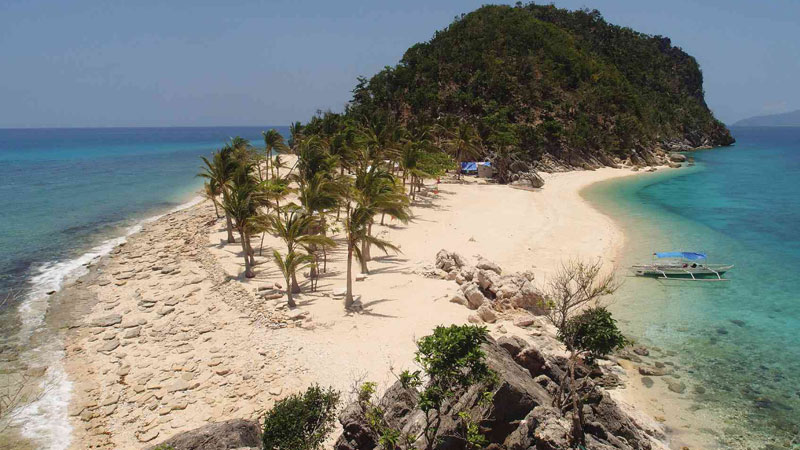
ILOILO’S HIDDEN PARADISE Cabugao Gamay is the most photographed islet on Islas de Gigantes for its rock formations, white beach and clear waters. NESTOR P. BURGOS JR./INQUIRER VISAYAS
The Inquirer is running a series of articles on the country’s tourism crown jewels—somehow uncut but equally sparkling and surprising as the usual vacation haunts. The articles will appear three times a week during the summer months. Please send us your own hot go-to discoveries to summer by. Text 0917-8177586 for details.—Ed.

CARLES, Iloilo—Despite its name, travelers won’t find any giant in this group of islands in northern Iloilo.
According to folklore, Islas de Gigantes got its name from the inhabitants who once roamed the islands and were about nine feet tall. The folk belief is seemingly supported by the sight of large wooden coffins found on the island that some locals say were used by the early settlers.

But more than the mythical stories, Gigantes Islands has drawn an increasing number of travelers with its isolated and pristine white-sand beaches and coves, crystal-clear waters, majestic rock formations, storied caves and other attractions.

It has been described as Iloilo’s “hidden paradise getaway” even as its fame continues to grow in recent years.
During the recent Holy Week, some 500 tourists flocked to Gigantes Norte, the main jump-off point in exploring the islands. The number represented a leap from the hundred or so visitors in previous years.

10 islands

Most of the tourists had to stay in tents because there were not enough rooms to accommodate them, according to Josephine Decano, resante island,ort manager of Gigantes Hideaway, one of seven resorts on the islands.
“There has been a marked increase in the number of guests, mostly because of accounts from those who have been here,” Decano said.

Gigantes Islands lies 21 kilometers northeast of Carles town proper, which is about 145 km from Iloilo City. It includes 10 islands, the biggest of which are Gigantes Norte and Gigantes Sur that have two villages each.
Gigantes Norte is composed of Barangays (villages) Asluman and Granada, while Gigantes Sur includes Barangays Lantangan and Gabi.

Although part of Carles, Gigantes Islands is more accessible from the neighboring town of Estancia. Trips to the islands on outrigger boats take from two to two-and-a-half hours depending on sea conditions.
Tourists taking the regular trips that arrive late in the afternoon in Gigantes Norte are advised to spend at least two nights and three days, including travel, to explore the main attractions of the islands.

Spelunking

Resorts usually assign a group tour guide for spelunking and island-hopping. The guide also attends to the other concerns of guests, including meals.
The first stop on a three-day, two-night tour is a late afternoon trip to the Gigantes Norte Lighthouse in Barangay Asluman at the northern end of the island.

While the original lighthouse had been replaced with a modern solar-powered one, the original building believed to be from the Spanish era has been preserved.
The lighthouse provides one of the best spots for a panoramic view of the sea at sunrise and sunset.
The second day of the tour can be spent island-hopping on a rented motorboat arranged through the resort that can also provide a packed lunch based on the guest’s choice of seafood.

Bakwitan cave

An early morning exploration of Bakwitan Cave, one of the numerous caves on the islands, can kick off a day of exploration and adventure.

So named because it was used as bakwitan, or an evacuation site and refuge by residents fleeing Japanese soldiers during World War II, the cave also served as shelter for families when Super Typhoon Yolanda struck in November last year.

The cave, however, is replete with sharp stones and steep areas, so tourists are advised to get a guide to help them explore the area, and wear hiking shoes. Flashlights are also a must.

Despite years of treasure-hunting activities, shards of pottery believed to be centuries-old can still be found inside the caves, along with human bones as the caves are believed to have been ancient burial grounds.

The cave exploration is moderately difficult and can take up to two hours, especially if one opts for the longer and harder route. The longer route involves crawling on the cave floor and through small openings, as well as maneuvering over sharp and steep rock formations.

The more adventurous are treated to a spectacular view of rock formations and lush vegetation from the cave’s exit.

Sandbar

After exploring the cave, tourists can cool off with a short dip at Bantigue Island Sandbar, which is accessible only during low tide.

The next stop is Cabugao Gamay Island, considered the most photographed among the islands’ attractions because of its postcard-like view of rock formations, white-sand beach, lush trees and clear waters.

Climbing the rock formations all the way to the top affords one the best spot for viewing and taking pictures of the whole islet.

Just a few minutes by boat from Cabugao Gamay is the Tangke saltwater lagoon nestled between towering rock formations. Here, one can swim in the cool waters, dive from the steep rocks and marvel at the massive columns.
On less crowded and quieter times, monkeys can be spotted peeking from, and climbing over, the rock formations.
From the lagoon, the daylong tour can end at Antonia Beach, which is popular for its two long and parallel stretches of white-sand beach. The islet is also a favorite spot for snorkeling, camping and other beach activities.

Spartan but adequate

First-time travelers to Gigantes Islands should be prepared to rough it, as accommodations are adequate but spartan. Resorts usually offer native huts with an electric fan and mosquito nets, if needed.
A generator provides electricity only from 6 p.m. to 6 a.m.  The only way to get around the island is by passenger motorbike.

And cell phone and Internet connections are almost totally nonexistent on Gigantes Norte.
Fortunately, there’s what the locals dub the “calling center,” a hilly area in Barangay Granada where one can pick up network signals and send text messages, make calls, or go online.

Budget travelers

Islas de Gigantes has also become popular among budget travelers and backpackers because of the relatively cheap cost of getting to the island, and its reasonably priced accommodations and food.

Freshly harvested scallops in various preparations (sizzling, grilled, breaded or baked) cost from P159 to P170 per kilo. Other seafood and fruits are just as affordable.

Like other islands in northern Iloilo, the Gigantes group of islands is still recovering from the devastation brought by Yolanda, with most residents losing their houses and fishing boats.

Despite that, Gigantes Islands remains largely unblemished. Its mystic and allure beckon to travelers seeking tranquility and communion with nature.


For your retirement and other real estate needs, please visit http://www.gregmelep.com.
Saturday, May 3, 2014

The night our editor came face-to-face with President Obama.


By 


 0 13 11


OBAMA’S autograph on Jimenez’s copy of his book “Dreams from My Father.”
Since the visit of US President Barack Obama last week, our newsroom has been enjoying a chuckle over a funny footnote to it.

We think that the breach in security protocol—perhaps the only one during Mr. Obama’s Manila visit—was committed by our editor in chief.

It happened at the Rizal Ceremonial Hall of Malacañang last Monday evening. With the state dinner and the performance of the Filipino artists just done, an announcement reminded the guests to remain seated as the US delegation, led by Mr. Obama, made its farewell.

That was when we spotted our editor gone from her chair, which was two seats away from ours. Before we knew it and before we could grab our phone camera, she was already standing in front of and speaking to Mr. Obama, a book and a ballpen in hand.

She really made good what she told us earlier she would do, and which we didn’t believe she could actually do—ask the US president to sign her copy of her favorite book of his, “Dreams from My Father.”

As President Aquino looked on fondly beside them, Mr. Obama and our editor exchanged pleasantries. Our editor would recount later, “I told him that of all his books, this one I love because it’s almost lyrical.”

Perhaps what allowed her to break through the cordon was when President Aquino, gallantly protective the moment he saw her beside him, introduced her to Mr. Obama as “one of the heroines of Edsa (revolution).” Our editor could only blush later, bashful, at the memory of such a special moment, and President Aquino would later grin at the recollection.

Scoop
IN AN Instagram post of Rep. Miro Quimbo, Inquirer editor in chief Letty Jimenez-Magsanoc is shown with her Obama book autograph during the state dinner.

She would chide me later about how I wasn’t quick enough to photograph the moment. “I wanted to see first,” I told her, “if you would survive, or if the Secret Service would tackle you to the ground.” That would have been a better—and more 
graphic—scoop, we laughed.

Our editor collects autographed copies of books of visiting US presidents. She also has a Bill Clinton autograph, secured during his Manila visit when he was president.
Last Monday’s state dinner was relatively relaxed. Even in a setting as grand as the Rizal Ceremonial Hall—with its massive chandeliers and the dark antique woodwork—we found the atmosphere light and laid-back. It didn’t have the pomp, glitz and stiffness one usually associated with Palace functions of previous eras.

“Tonight is going to be a different Malacañang,” a top Palace official muttered to us as we stepped out of the Guest House to walk the Palace driveway leading to the Rizal Hall, where the dinner reception would be.

As soon as the guests caught the scent of sampaguita as they went up the grand staircase, we understood readily what he meant. This time, the style wouldn’t be so low-key as to be almost diffident. It would have the usual elaborate attention to details, but it would have some levity and drama.

The Aquino administration has always wanted its state receptions or Palace social functions not only to be low-key, but to be politically correct in its simplicity. This must be, not so much to serve as counterpoint to the opulent eras of the past, as to be in keeping with the character of the bachelor president himself. Mr. Aquino is simply neither extravagant nor vain. He’s one president whose face you don’t see splashed on tarps nationwide, certainly not even on state-funded ambulance vehicles. He does things by the book. He’s always conscious of having to set the right example.

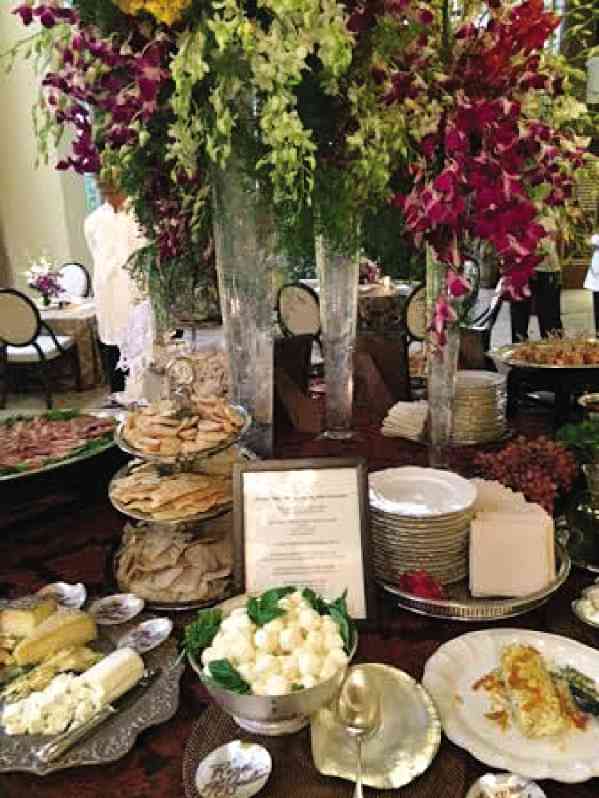
Cocktails at the Guest House featured cheeses from Davao and Laguna, Excelente ham and native jams. PHOTOS BY THELMA SIOSON SAN JUAN
This state dinner was no different. While the thorough preparation was evident, it didn’t go overboard.
Cocktails were served at the Guest House, where music by a string ensemble welcomed the guests.

With a twist

The hors d’oeuvres were Filipino delicacies given a twist, including Philippine cheeses, ham, jam and honey—Davao Malagos selection of blush, goat cheese and blue pepato, Laguna smoked kesong puti, dried mangoes and jackfruit, pili and cashew, Excelente Quiapo ham with watermelon and honeydew melon, Guimaras mango jam, santol marmalade, Negros guava jelly, sugarcane honey.

Closer to dinnertime, the signal for the guests to move to the main Palace for the dinner reception was the performance of famous Philippine festivities, including the ati-atihan, by youngsters. This recreation of the Philippine fiesta on the Palace grounds was in time for the promenade of the guests.

What made the fiesta contemporary and vibrant was the hip interplay of light and sound. The guests, especially the foreign diplomats, stopped their leisurely walk to have their photos taken before the ati-atihan; some even took videos.
In the main Palace, the tall columns in the foyer were wrapped in sampaguita garlands. Such garlands also draped the baluster of the grand staircase, so that you caught a whiff of the floral scent as you went up the steps.
It was a very elegant welcome, nothing opulent yet symbolic of the Philippines. The use of sampaguita garlands, strung at a deadline pace by craftsmen from Laguna, has become a style hallmark of this administration.

No matter how often one has seen them in previous political eras, the mammoth chandeliers hanging in the grand corridor leading to Rizal Hall always make an awesome sight. A throwback to the refurbishing done in the Marcos era, they never fail to remind you of the heritage and colorful history of Malacañang itself.

From the hallway, before you loomed the center platform decked with nipa. The small nipa hut may have seemed too native for social media cacklers, but in fact, the images don’t do justice to how this setup really looked—the lighting made it thoroughly modern. Graduated hues of green and yellow light cast a contemporary pattern, an attractively elegant glow.

Layouting genius

Before it was the presidential table, the only round table in the hall. All the other tables were rectangular, running the length and width of the hall—a stroke of layouting genius to accommodate the 350 guests without leaving them feeling cramped.

On the entire length of each table ran an arrangement of native produce—fruits and vegetables nestled in straws of green grass. It was a mirage of colors, shapes and textures heightened by muted candle lighting in capiz holders.

The table décor denoted bountiful harvest—the organic and natural feel a good counterpoint to the opulent chandeliers and vintage wood of Malacañang. In this way did it succeed—it could have looked too native, but didn’t, because of the palatial setting. The contrast worked.

All this styling was done in-house, by the Palace team under the direction of Social Secretary Susan Reyes, who has always preferred to stay anonymous the past three years of Palace receptions and socials, and Jun Mogado, the Palace stylist.

Like the ambiance, the performance was a good mix of the Filipino and the Western, of western pop, OPM and Filipino classics. We loved the way apl.de.ap.’s “I’ve Got a Feeling” segued to the Bayanihan Philippine Dance Company’s “Singkil” and the Power Dance. The music layering was a masterstroke; the blend of East and West—indeed, the Filipino culture by-product of centuries—couldn’t have been more evident.

The Madrigal Singers opened with “Kaisa-isa Niyan” and “Da Coconut Nut”; then Leo Valdez and Bituin Escalante joined them, with the Power Dance, in “Hibang sa Awit” and “Balut.” The mood turned young and soulful with Kuh Ledesma’s “Let’s Stay Together.” This rocked, and Obama rocked with it.

After apl.deap.’s “I’ve Got a Feeling” and the Bayanihan’s “Singkil,” the whole ensemble returned to sing “Happy,” to the accompaniment of Mel Villena and the AMP Big Band.

The show was short and snappy. And over dinner, we loved the way they played “Moonlight Serenade” and jazz from the big band era.

When we told Secretary Rene Almendras how we were enjoying the performance, he said, “Wait till you hear us.” They would top it, he said. We thought he was only kidding; he wasn’t.

Next second we looked, he was gone from his seat, and was standing up front, with Cabinet members Butch Abad and Babes Singson, being introduced by the President in their number, Marvin Gaye’s “What’s Going On.” And the rest, as they say, is history. (If Obama is good at selfies, our President’s official family has its sing-along. In the 21st century, the karaoke moment is a Pinoy’s inherent right, or haven’t you noticed?)

The dressed-up crowd cheered and actually sang along with the three lead vocalists. It would be recounted later that, as the newly discovered singers did their Marvin Gaye cover, Mr. Obama kept muttering, “I can’t forget this night… memorable.” Well, it’s nice to know that one of the most powerful men in the world enjoyed his dose of Filipino humor… we mean, musicality.

Meanwhile, the real appetizers of the dinner were appropriately light and refreshing—Lobster Kilawin Carpaccio, Baby Sprouts and Fiddle Fern with Calamansi Jam, followed by a Seafood Stew of River Prawns, Scallops, Smoked Mussels, Sweet Banana in rich Tomato and Coriander Sauce.

This was to pave the way for the main course of Marinated Beef Tenderloin with Annatto Lemongrass, Pumpkin Mash and Vegetables from a Batangas farm. The serving was just right, not huge.

It left room for a most interesting dessert—Coconut Lychee Ice Cream with Mango Macapuno Strudel, served in mini-coconut husk that was actually chocolate made to look like a husk, complete with ultra-thin light-colored strands.
As the guests left, the Palace grounds returned to silence, the vines of flickering lights from the centuries-old tree on the driveway stirring in the midnight breeze.

The day was done.
Mr. Obama wasn’t the only one who found the night memorable.


For your retirement and other real estate needs, please visit http://www.gregmelep.com

Two decades of mountain resort living.


By 

 0 1 0

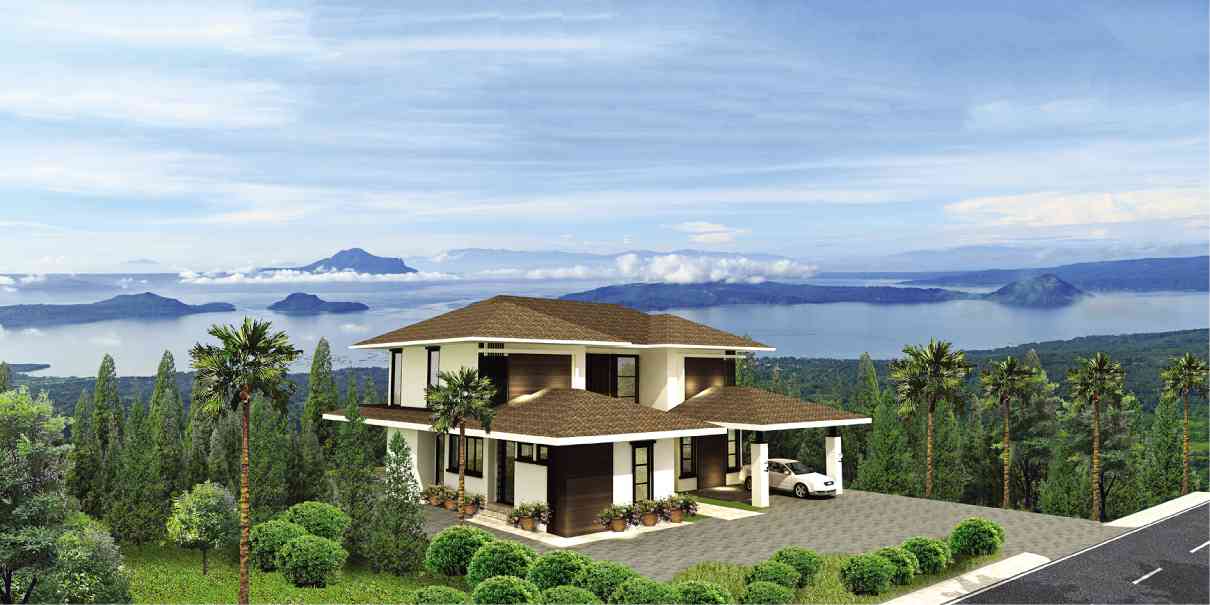
SYCAMORE Heights features Asian Contemporary homes with prime scenic views of Taal Lake, Midlands Fairways and the surrounding mountainside.
Tagaytay Highlands has defined mountain resort living for two decades. A leisure development of the SM Group of Companies, it is still the ultimate mountain resort getaway and leisure destination for the family.
Tagaytay Highlands’ 20th anniversary celebration last month was highlighted by the Spirit of ’67 concert wherein buffet was served. This was a perfect combination of gastronomic feast and family entertainment by the club’s favorite band.
To commemorate the club’s 20th year, the exquisite works of art by sculptors Ben Hur, Jik and Bumbo Villanueva were featured in a special exhibit at The Sports Center. Fond memories of club members’ mountain living were preserved in wood and bronze by the artists.

As part of the celebration, anniversary Masses were held at the Holy Family Chapel for two Saturdays—April 12 and 26. Exhibited at the same venue were club member Cornelio “Dondon” Awa’s  artworks on Christ’s passion, death and resurrection titled “Sin Pecado.”

For the solemn observance of the Holy Week, a two-hour Holy Week Recollection for three days was presided by Rev. Fr. Godwin Tatlonghari at the Holy Family Chapel.

Chapel activities included Holy Masses, confessions, Way of the Cross, “Pasyong Mahal” (Holy Passion), Commemoration of the Lord’s Passion, procession and Easter Vigil. Capping the activities was “Salubong” (Tagalog for meeting), a predawn ritual that reenacts the Risen Christ’s meeting with His mother held on Easter Sunday.
The club held the traditional Easter Egg Hunt for kids.

Nestled in one of Tagaytay’s highest elevations, Tagaytay Highlands has not only stunning views of the surrounding mountain range and Taal Lake and Volcano but also all-year-round cool climate. It has become the benchmark for a world-class private and exclusive luxury mountain resort community.

World-class club lifestyle
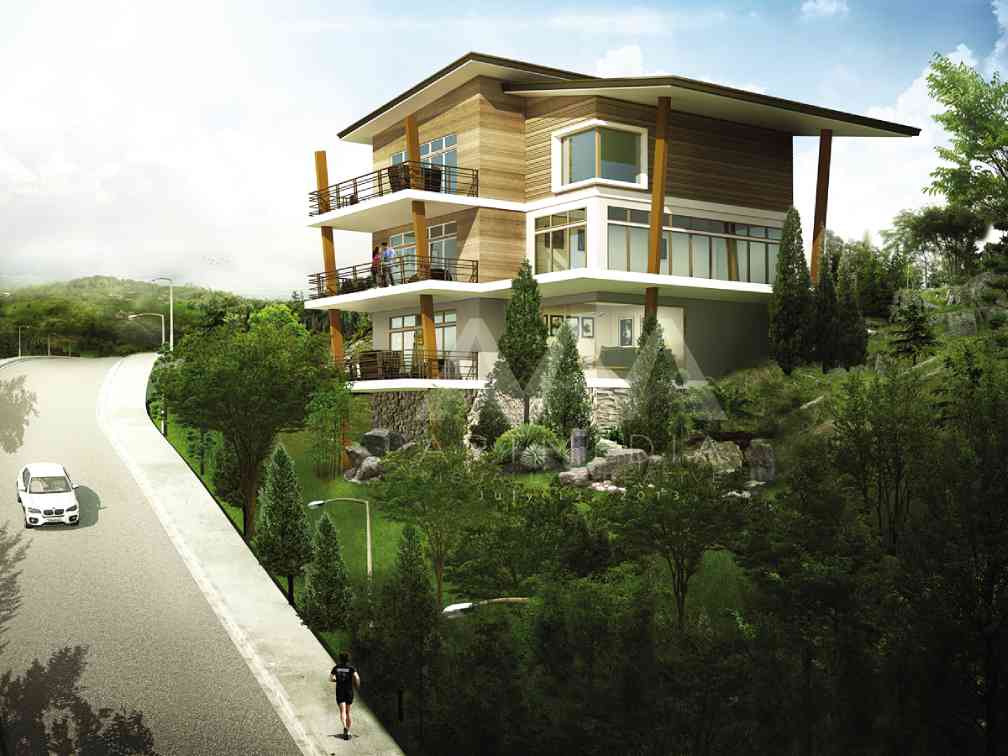
THE ASPENHILLS community features modern ranch-style log homes.
Its luxury second homes—the ultimate family getaway—provide refuge from the hustle and bustle of city life. The world-class club lifestyle provides fun, convenience and hassle-free country living through the following:

• The first cable car system (the first in the country) and funicular (tram) from Switzerland;

• Highlands Peak Bar, Tagaytay Highlands’ highest point offering a 360-degree view of the mountain resort and its environs.

• Two championship golf courses—one at Tagaytay Highlands and the other at Tagaytay Midlands including its newest Lucky 9 golf course providing members a total of 45 playable holes;

• The Sports Center with swimming pool, basketball court, tennis, badminton and squash courts, billiard hall and bowling alley and children’s playground;


• The Country Club with mini golf course, swimming pools and fishing pier; horseback riding ring;
• Animal Farm, petting zoo and home to miniature animals from different parts of the world;
• The Gardens, botanical park, which is perfect for a stroll;
• More than 20 dining outlets offering a wide range of various cuisine;
• The Spa and Lodge;
• Holy Family Chapel at The Highlands and Madre de Dios Chapel at The Midlands;
• Basic facilities including security, uninterrupted power and water supply; independent fire-fighting team; 24-hour clinic with ambulance; beauty salons and Wi-Fi zones.

Investment

If you’re planning to invest in a weekend home in Tagaytay Highlands, you have three options:

1. Leisure lot developments are where you will build your own house. You can choose from these developments:
Sycamore Heights is a private and exclusive residential development with an Asian Contemporary theme. Situated in one of the most prime locations in the luxury mountain resort destination, it offers leisure residential lots ranging from 280 to 959 square meters. With an elevation of 165-195 meters above sea level, this community offers prime scenic views of the majestic Taal Lake and Volcano, the Midlands Fairways and serene mountainside.

Nob Hill is Tagaytay Highlands’ leisure lot development that seamlessly blends nature with modern design. It features contemporary architecture, linear parks, nature elements and generous open spaces. Lots range in size from 300 to 722 square meters and homes are characterized by natural light-colored stone, painted cement finishes, stainless steel and powder-coated metal trims. Large windows provide natural light and fresh air inside and incorporate nature as the center of living space. With an elevation of 250-265 meters above sea level, Nob Hill offers beautiful views of Mount Makiling and the Highlands golf course.

Aspenhills is an enthralling private mountain hideaway where you can build your modern ranch-style log home. It features homes characterized by touches of glass and the rustic charm of wood and stone. One can relish life at the hilltop where panoramic mountain vistas provide a stunning backdrop to the community. Lot sizes are from 300 to 800 square meters. The Sunshine Picnic Grove, Little Ranch Playground and Meadows Community Clubhouse are places in Aspenhills where you can create lasting memories with your family.

Katsura, Sierra Lago, Pueblo Real and Fairfield are your other choices for leisure lot developments.

2. Luxury condominiums offer lock-up and leave convenience. You can choose either Woodridge Place or Horizon.
Woodridge Place is a luxury condominium development offering traditional charm and modern conveniences. Its interiors present well-appointed one-, two-, three- and four-bedroom units ranging from 41 to 253 square meters with balcony areas that maximize natural lighting and cross ventilation for energy efficiency. Taking inspiration from the mountain resorts of Colorado, Woodridge Place features spectacular views of the Highlands golf course and the surrounding mountains.

Horizon is the other luxury condominium at Tagaytay Highlands. Terraced on a gently sloping terrain, it is a golfer’s haven. Horizon is a nine-hectare property that faces the Tagaytay Midlands golf course and has a magnificent view of the Taal Volcano and Lake. It has its own putting green, golf club lockers in the hallways, an infinity pool and landscaped gardens.

3. Signature log cabins are for those looking for the utmost in luxury mountain resort living.
Interested buyers who didn’t get the chance to invest in the flagship luxury Woodlands log cabins may now invest in the latest log cabin homes at Woodlands Point.
To know more on how to own a Highlands home, please visitwww.tagaytayhighlands.com.


For your retirement and other real estate needs, please visit http://www.gregmelep.com.